In this case
One workshop and a stack of notes
After the crisis had settled, the people involved identified a need for better preparedness. They sat down for a workshop. Its handwritten notes and a set of existing crisis communications templates were what I had to work with. The immediate job was to give everyone a single draft they could check against how decisions actually got made.
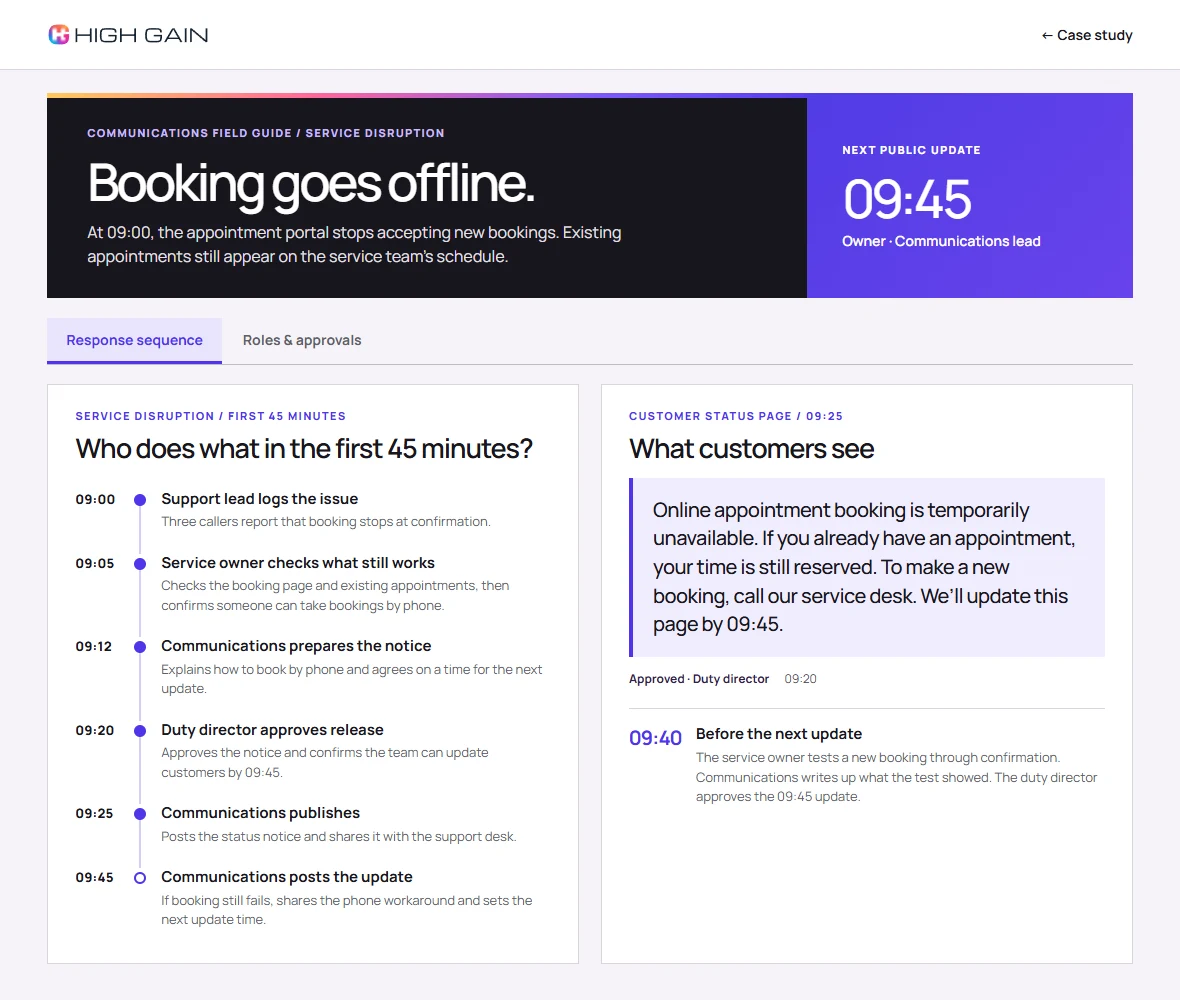
I used Claude Opus 4.6 to turn those materials into a preparedness guide. By the end of the first week, the group had a custom, branded guide with roughly 110 pages to review, including severity ratings, an approval chart, and a map of the steps from the first report through the public update.
Who writes, who approves, who hears about it
A RACI matrix spelled out who did the work, who owned the decision, who had to be consulted, and who needed to hear the outcome. A separate flowchart followed an issue from the moment someone noticed it through publication and follow-up.
I used image generation to draft the diagrams. Those charts would usually take several meetings to draw up. This time, I was able to generate them on the fly as I was being briefed. People could look at a specific handoff and say whether the right person was in the box.
What took a few weeks
The initial timeline estimate to project completion was five months. Here, the complete first draft was ready in a week. Stakeholders then reviewed the roles, approval steps, and diagrams. It took a few weeks to finalize the guide. The team now had one place to look up who was responsible for a public statement at each step.