In this case
What regulars remembered
Marketing wanted to win back people who used to love the chain. Operations had heard the complaints, too, but questioned how much a handful of bad reviews could tell them. Long-time regulars offered a useful comparison. When they said the portions had shrunk, they were comparing the meal they had just bought with one they remembered from ten years ago.
We brought marketing a different slice of the evidence each week. Social posts came first, then location reviews. We looked at news coverage and industry podcasts for context. We also studied how other chains had handled turnarounds, especially what they fixed before inviting customers back.
How we read tens of thousands of comments
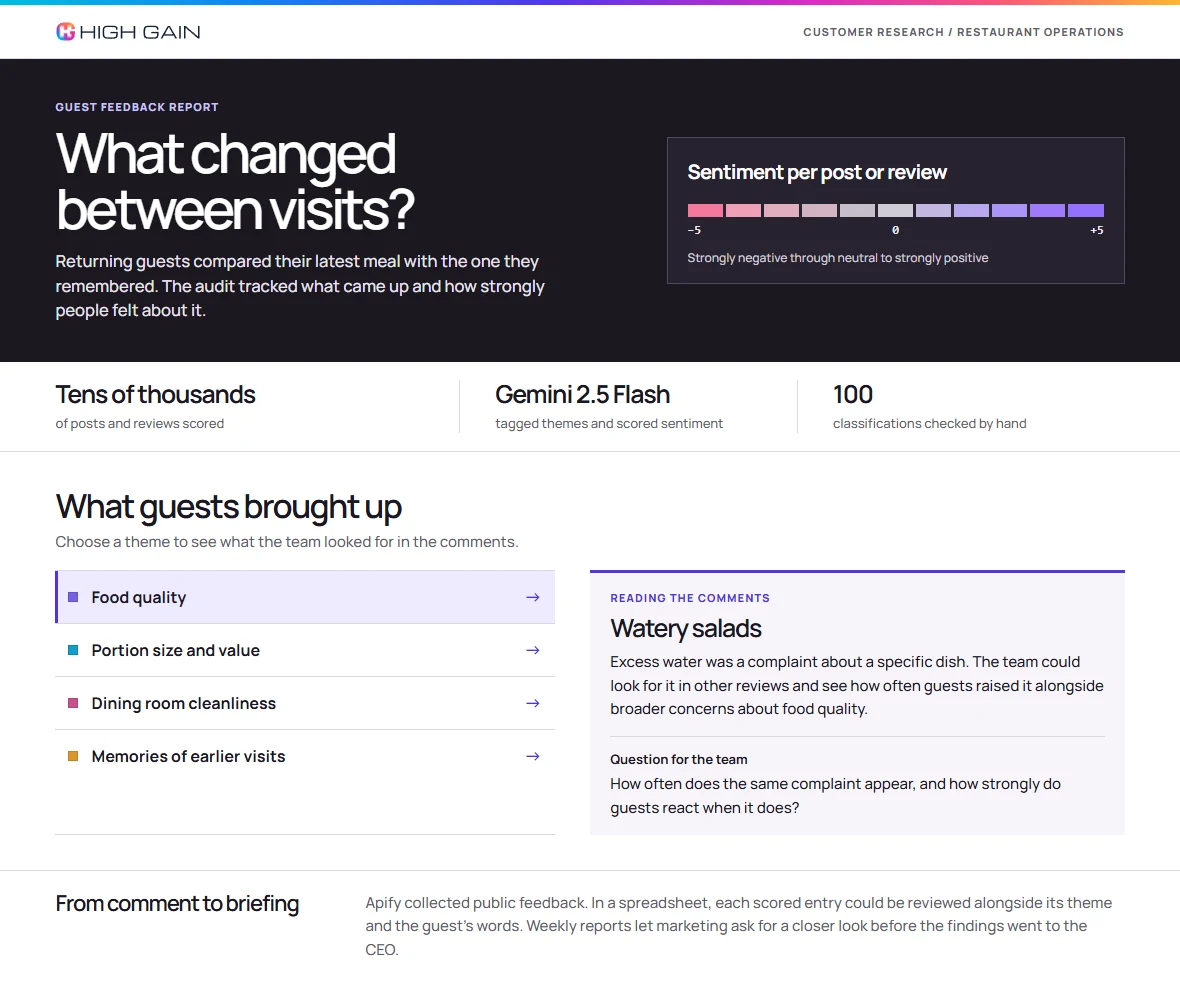
I used Apify to collect public posts and reviews and built a spreadsheet around the questions marketing and operations had raised. Gemini 2.5 Flash tagged tens of thousands of entries by theme and scored each from −5 to +5 for sentiment. I spot-checked a sample of 100 entries before turning the results into charts.
For each issue we could count how often it came up, see how strongly guests felt, and go back to their words. We applied the same categories to competing chains so the team could compare complaints about food quality, portions, service, cleanliness and other factors.
What went to the CEO
Marketing used the weekly meetings to flag questions it wanted us to pursue. At the final meeting, we put the findings and creative recommendations in front of the CEO. He said the analysis backed up several hunches and helped leadership decide which problems to fix and which improvements it could credibly talk about in the next consumer campaign.